MASUTANI LAB
Research

Masutani Lab

Research

Research

Research programmes

Four evidence-based programmes from official pages and primary publications.
01

Human translesion synthesis and DNA polymerase eta

How do human cells copy damaged DNA without converting every replication block into genome instability?

The laboratory studies translesion DNA synthesis, which lets specialised polymerases copy lesions that stall normal replication. Masutani’s foundational work identified human DNA polymerase eta as the XPV gene product, explaining the sunlight-cancer susceptibility of xeroderma pigmentosum variant cells.

Current work examines how Y-family polymerases engage PCNA and damaged templates, connecting purified-protein mechanism to cellular genome stability.
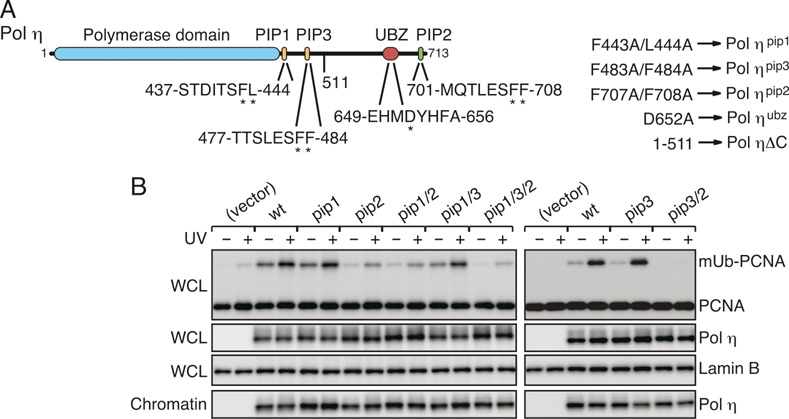
Primary-publication evidence defining lesion bypass by human DNA polymerase eta.
02

PCNA ubiquitination and damage-tolerance pathway choice

How does modification of the replication clamp route damaged forks toward TLS or template switching?

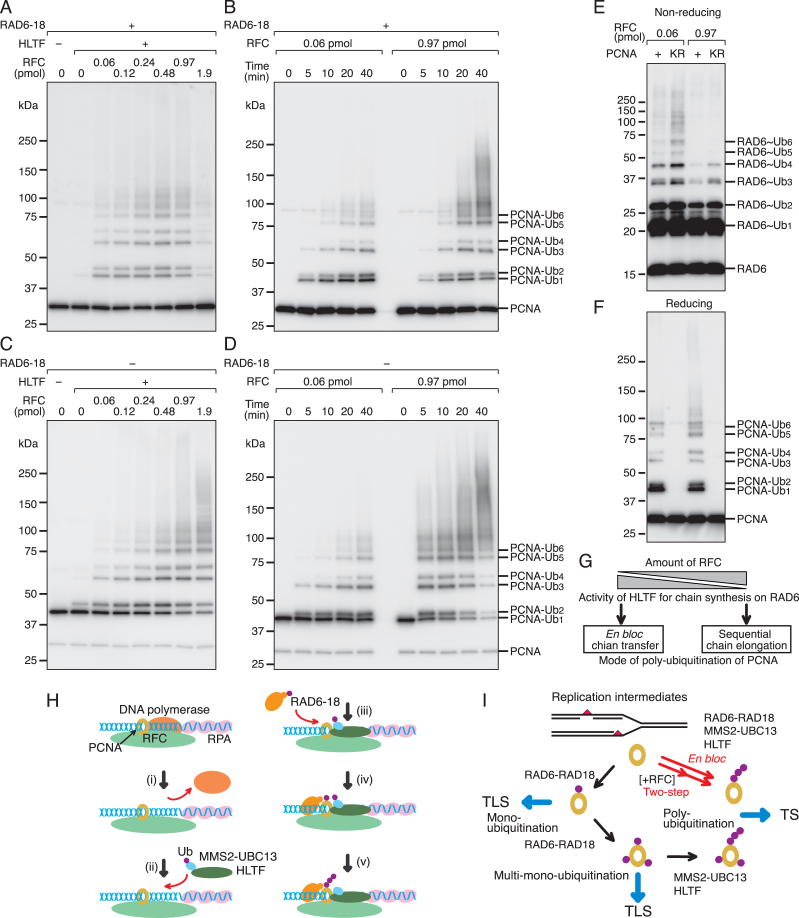
PCNA is a decision platform at damaged forks. Monoubiquitination recruits TLS polymerases, while K63-linked polyubiquitination can promote template switching.

Work on HLTF, RFC and USP7 shows that pathway choice depends on both modification level and the context of the loaded PCNA clamp.

Primary-publication model of PCNA modification, RFC and HLTF-dependent pathway choice.
03

RFWD3-dependent DNA damage tolerance

How does RFWD3 coordinate PCNA modification and TLS polymerases during replication stress?

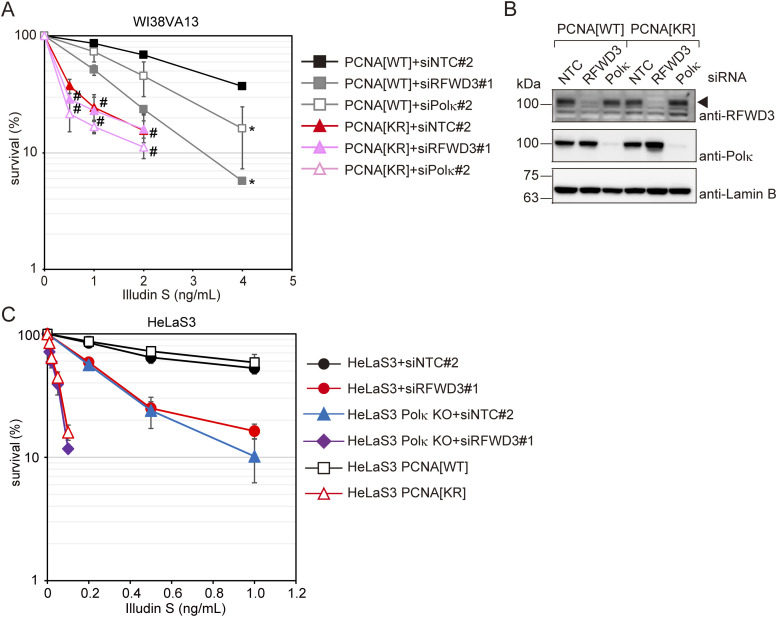
RFWD3 is a genome-maintenance ubiquitin ligase linked to Fanconi anaemia. The group studies how it works with PCNA modification and TLS polymerases after DNA damage.

Genetics, nascent-DNA measurements and protein-modification studies connect stalled-fork mechanisms to inherited genome instability.

Primary-publication experiments defining RFWD3 and TLS-polymerase contributions to damage tolerance.